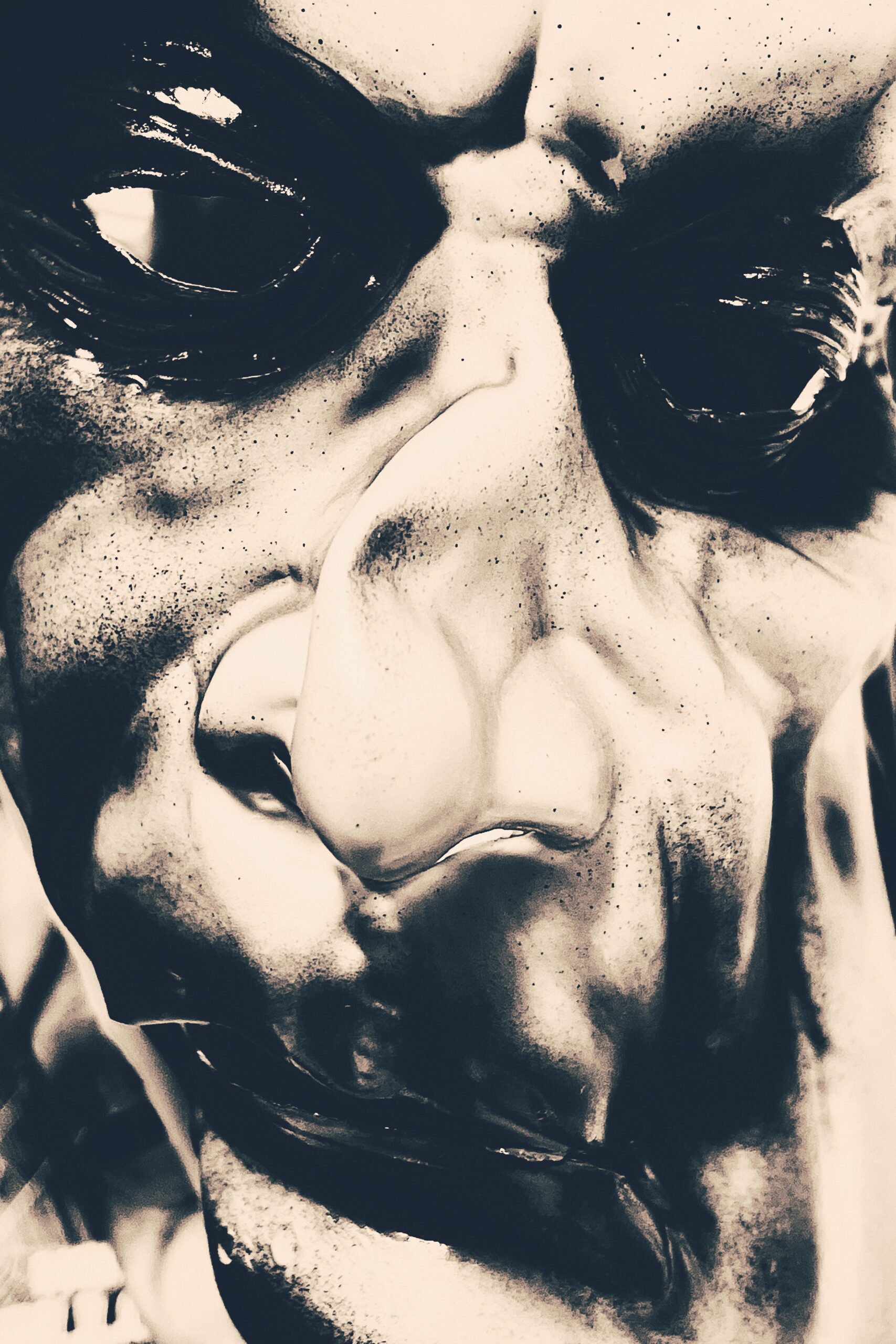
And we ask: Where do we fit in?

And we ask, where do we fit in? And if the answer was “no where”, where does this leave us? Right here in this backyard-house, the windows dark and swollen with night; the curtains remain closed even at day, the bed with its torn away sheets, the pale stripes of the mattress. We once had a picnic on the floor in the hall, right underneath the attire and a few feet away from the door; a sliver of light crept underneath the door, we had a candle stuck to a tin of tomatoes and spilled on the bedsheets we had draped on the floor lay:

• a broken bread.

• a hunk of cheese still wrapped in its plastic.

• a can of sardines, torn open

• the pillows we brought here from the upper bedroom (“Let me have that: An upper and a lower bedroom. This is the kind of luxury I always longed for. A lower tract for the servants. A reading room, a room designated to ironing, a botanicum full of orchids, humid, shady, thick with odors.” And he let her have that, they rejected two perfectly good houses that would have lasted their money for two month longer and favored this slightly broken down and overpriced venue.)

• A book. Although he had not yet decided which one: He used to bring three books, as he could never really decide what to read and usually ended up glancing at the headlines of a newspaper he had found in the subway and never touching any of the books he brought and staring out of the window, contemplating the futileness of knowledge. He said: All we ever know is the obvious. And he would not elaborate on that. He said: There is not more to say on that matter. Once you expand you universe by including previously uncharted territory, it instantly shrinks again to the boring old places where you have been over and over. And he then battled this by forgetting: Places that had been in reach, he just would have to extend his arm for it, became wild, broken down and rejected places with no paths leading there.

• sheets of paper, torn and pasted together with tape and glue, piled up in a corner of the bedsheets. He occasionally flipped through these, digesting the world in broken headlines and beginnings of articles. Jump right in. The world is more interesting when fragmented.

j j j

The image, an answer to the enigma of death, uncovers a new enigma in the image.

— Hans belting

j j j

Already Knowing

I started watching movies twice. And not good movies, just movies. I have no idea, when this started. It just felt more comfortable to watch the movies where you already know how they end. It wasn’t about the how-it-ends. It was just about the already-knowing. 

j j j

Agenten des Zerfalls

Das Haus und sein Leben vom gebaut werden bis zum Abriss, Zerfall,  verstreut werden. Die Menschen, die ihre Abdrücke darauf hinterlassen, einen Tag, eine Woche, ein Jahr, ein Leben darin zubringen und doch nur einen Teil des Weges des Hauses mitgehen. 

Das Haus als Aufzeichnungsapparat der Leben, die durch es hindurch (oder an ihm vorübergehen): Die Bilder von den Abdrücken der Stadt auf der Haut des Hauses. 

Das Schwarz-Weiß hat hierbei die Funktion, die Gebäude aus der Zeit heraus zu nehmen, die instantane Patina der Grauwerte. 

Die Agenten des Zerfalls, das Wasser, der bröckelnde Putz, die Übermalungen, die Schichten von Zerfall, Inbesitznahme von Territorium, vom Wegziehen, von der Post, die nicht mehr zugestellt werden kann, die zerbrochenen Fensterscheibe und dahinter das Licht in den still-gewordenen Räumen. Von der Archäologie des Jetzt, man schaut ein Gebäude an, dessen Funktion längst vergessen ist, ein Tempel, eine Werkhalle, ein Wohnhaus? 

Straßennamen funktionieren nicht länger als Marker, die anzeigen wo Menschen leben, sondern als Markierung eines Fundorts. 

(Das Haus als Readymade – daher auch nicht wie bei den Bechers/Ruscha das Gruppieren gleicher Funktionen, sondern das Anonymisieren, das  Haus, das aus der Funktion gefallen ist, das Haus als Rest, als Überbleibsel und dazu seine Zerfallsprodukte: Aber was bedeutet das für die Strenge/Gleichförmigkeit, mit der die Häuser aufgenommen werden müssen?): Das Nüchterne Front/Central als gemeinsames Element – einen Postkasten(die Fragmente, Überbleibsel von HAUS) in derselben Weise aufnehmen wie das HAUS; Ornament werden. 

In diesem Zyklus von Aufbau und Abriss steht der Stein dann in der Mitte: Er ist entweder ein Rest einer Ruine oder der Grundstein eines neuen Bauwerks. (Und das ist, was passiert, wenn man die Etiketten “Zorn”, “Terror” entfernt: Von den Dramen bleiben nur noch die Fragmente: Of that colossal wreck, boundless and bare / The lone and level sands stretch far away.) Wie Geschichten zu Geschichte werden.

Die Hanauerfahrung als Ausgangspunkt: Die Frage, was bleibt vom Terror übrig in den Steinen, welchen Abdruck hinterlässt das Geschehen auf den Häusern. Die Antwort: Nichts. (in diesem Sinne sind die Bilder das Bild des Scheiterns der Abbildung des Terrors: Wenn man Bilder der Häuser einer Kleinstadt macht, in der ein furchtbares Verbrechen stattfand bleiben am Ende nur Bilder von Häusern einer Kleinstadt übrig.)


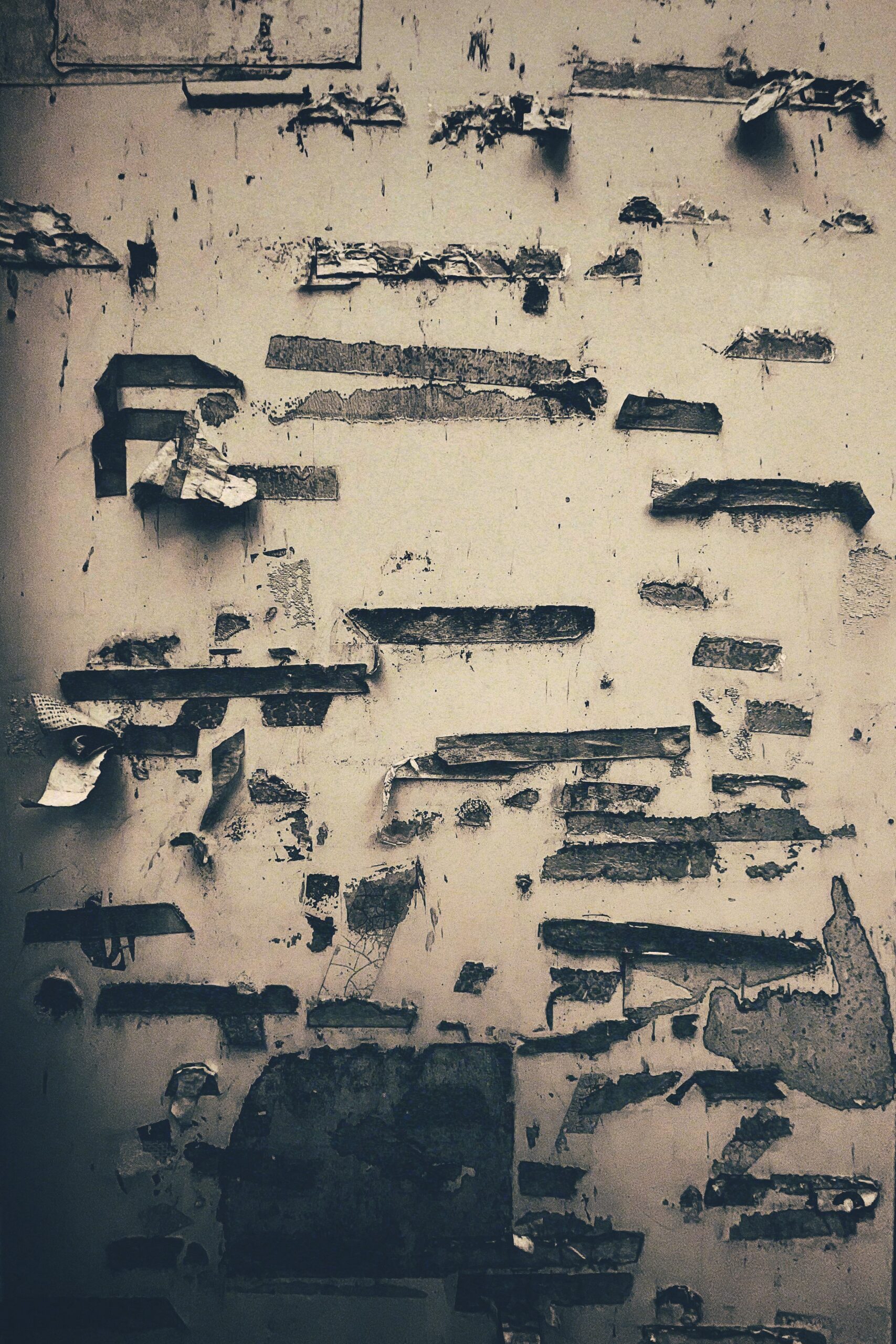
Das Verflachen des Bildes, das Verwandeln der Stadt in eine Art horizontales Sediment: Aus Stadt wird etwas Geschriebenes, ein Blatt, auf das die Zeit sich einschreibt. Farbschichten über Farbschichten, Abrieb, Staub, Buchstaben in einem Alphabet, das wir nicht entziffern können und deren Worte durcheinanderreden und viele Sinne ergeben.

(es fehlen noch Bilder des Bodens, die neben die verflachten Bilder gestellt werden müssen, um diesen Eindruck zu verstärken)

(wie stadt geschichte wird: Und hier findet sich auch die  Abstrahierung des Hanau-Anfangs wieder: Welchen Abdruck die  Geschichte (in diesem Fall die Geschichte  des  Terrors)  auf der  Stadt hinterlässt. Die Antwort ist: Keinen.

(das abstrakte Schreiben: Das Schreiben, nicht um eine Information zu transportieren, sondern um ein Territorium zu markieren: Im Ort, aber vor allem auch in der Zeit (Kilroy was here)

Und das ist auch die Art und Weise, wie man diese verschiedenen Schichten Farbe interpretieren kann: Ein ständiges Schreiben, Überschreiben und Umschreiben von Stadt.

j j j

The Simple Image


“Where the real world changes into simple images, the simple images become real beings and effective motivations of hypnotic behavior.”

― Guy Debord, The Society of the Spectacle

j j j

Images as Debris


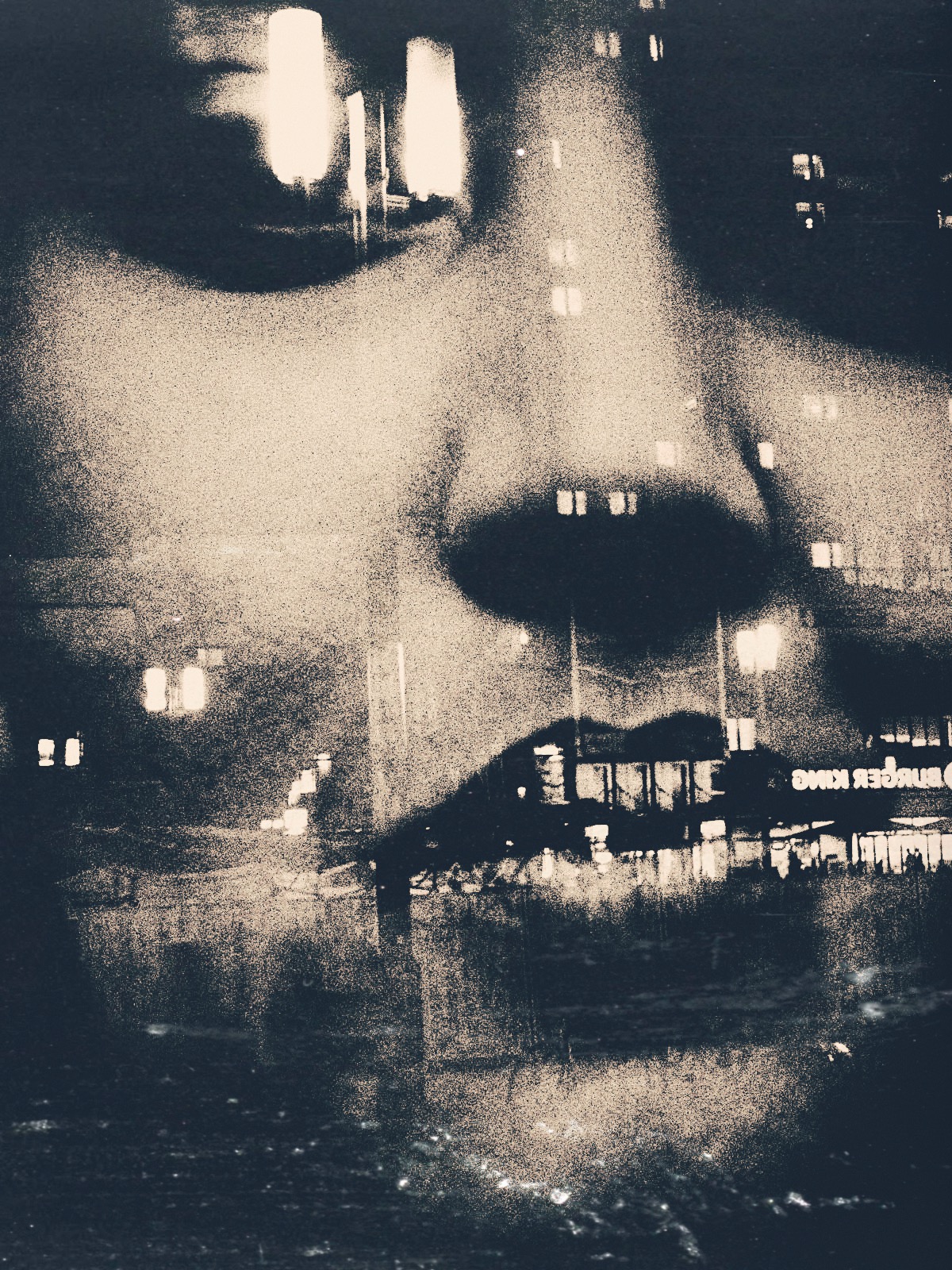
images as debris

this is how we see the world: you don’t know where a picture begins and where a picture ends.

“I wanted to pull out everything that was nameable in my work and have people look at fragments of both paint and images coming together—filtering together—and then falling apart.”

–sarah sze


What we are looking for: Pictures that are things by themselves, not pictures showing something else.

j j j

Du musst dein Leben ändern

Archaïscher Torso Apollos

Wir kannten nicht sein unerhörtes Haupt,
darin die Augenäpfel reiften. Aber
sein Torso glüht noch wie ein Kandelaber,
in dem sein Schauen, nur zurückgeschraubt,

sich hält und glänzt. Sonst könnte nicht der Bug
der Brust dich blenden, und im leisen Drehen
der Lenden könnte nicht ein Lächeln gehen
zu jener Mitte, die die Zeugung trug.

Sonst stünde dieser Stein entstellt und kurz
unter der Schultern durchsichtigem Sturz
und flimmerte nicht so wie Raubtierfelle;

und bräche nicht aus allen seinen Rändern
aus wie ein Stern: denn da ist keine Stelle,
die dich nicht sieht. Du mußt dein Leben ändern.

— Rainer Maria Rilke

j j j

Fabric

What is the visual fabric of memory? Its dominant feature is a a lack of precision. It consists mainly of holes with a pull that wants them  to be leaving holes to be filled in: What is not a hole is just something that points to something we cannot see: An ongoing fight against the indexicality of the image. It does not show something, it only reminds me of something the picture does not show. 

In this it turns into a constant slipping: We remember, we forgot, we stumble, we catch ourselves and this catching-ourselves becomes the actual stumble…

j j j

Clusters


It is that time itself has been traumatized so that we come to comprehend history not as a random sequence of events but as a series of traumatic clusters.

— Mark Fisher, The Weird and the Eerie

j j j