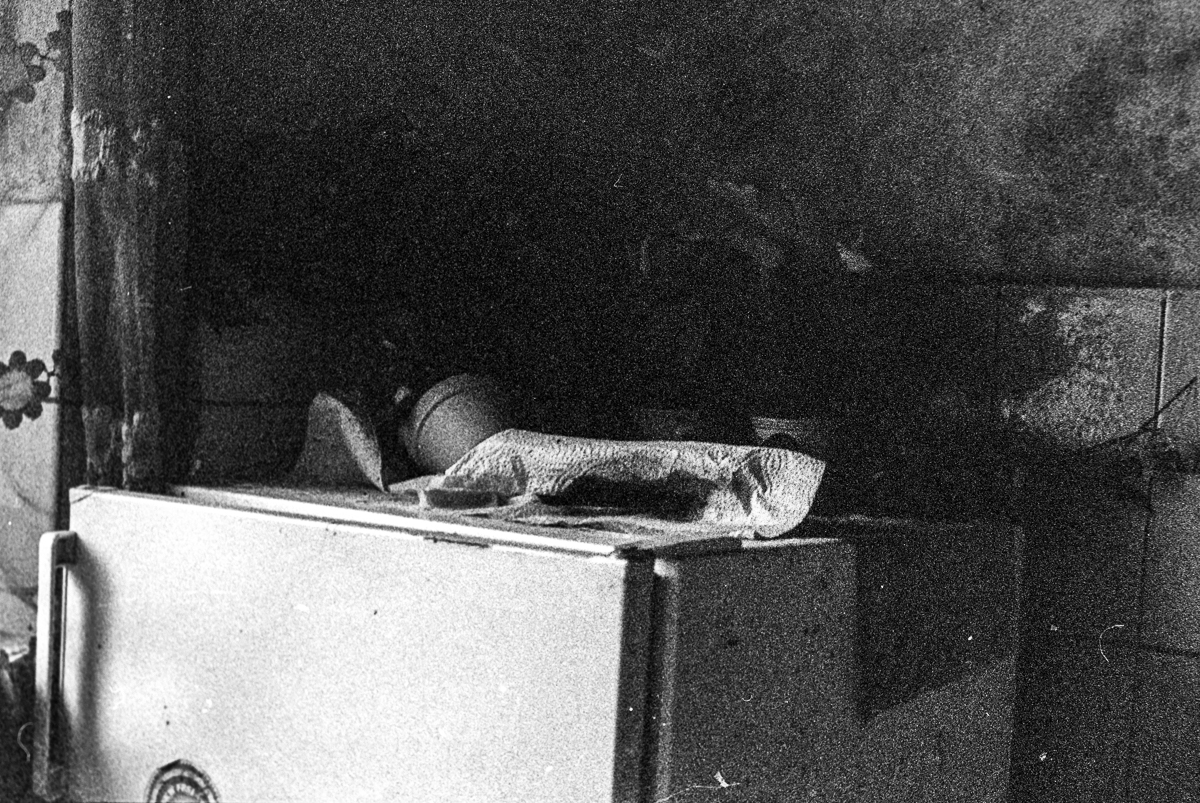
When I find myself in an unfamiliar place, I’m overcome with the urge to exhaust it, to cover as much ground as I can and reach to some kind of arbitrary, invented limit of photographs I could make there. Like the cartographers of Borges’ story constructing a map of the Empire to match the size of the Empire itself, I aspire to a completeness that borders on the absurd. *In the name of completenes*, Georges Perec writes, *we would like to believe that a unique order exists that would enable us to accede to knowledge all in one go*. One rainy October weekend in Paris, Perec himself sat in a cafè at the Place Saint-Sulpice detailing every occurence that passed through his field of vision, forming an account of *what happens when nothing happens other than the weather, people, cars and clouds*. Despite his efforts to chart all the minutiae that typically go unnoticed or unremarked upon – the ‘infra-ordinary’, as he termed it – he demonstrated that even the whole of our individual observations amounts to very little, barely a drop in Heraclitus’s ever-flowing rover. In Italo Calvino’s Story “The Adventure of a Photographer”, the protagonist remarks that *photography has a meaning only if it exhausts all possible images*. This view only encourages my feeling that it’s necessary to apprehend the entirety of a place. But, then again, by what means could this even be realized? And how might I contend with the idea that photography is otherwise devoid of meaning?
— Alan Huck, I walk towards the Sun, which is always going down.