My Inner Landscape

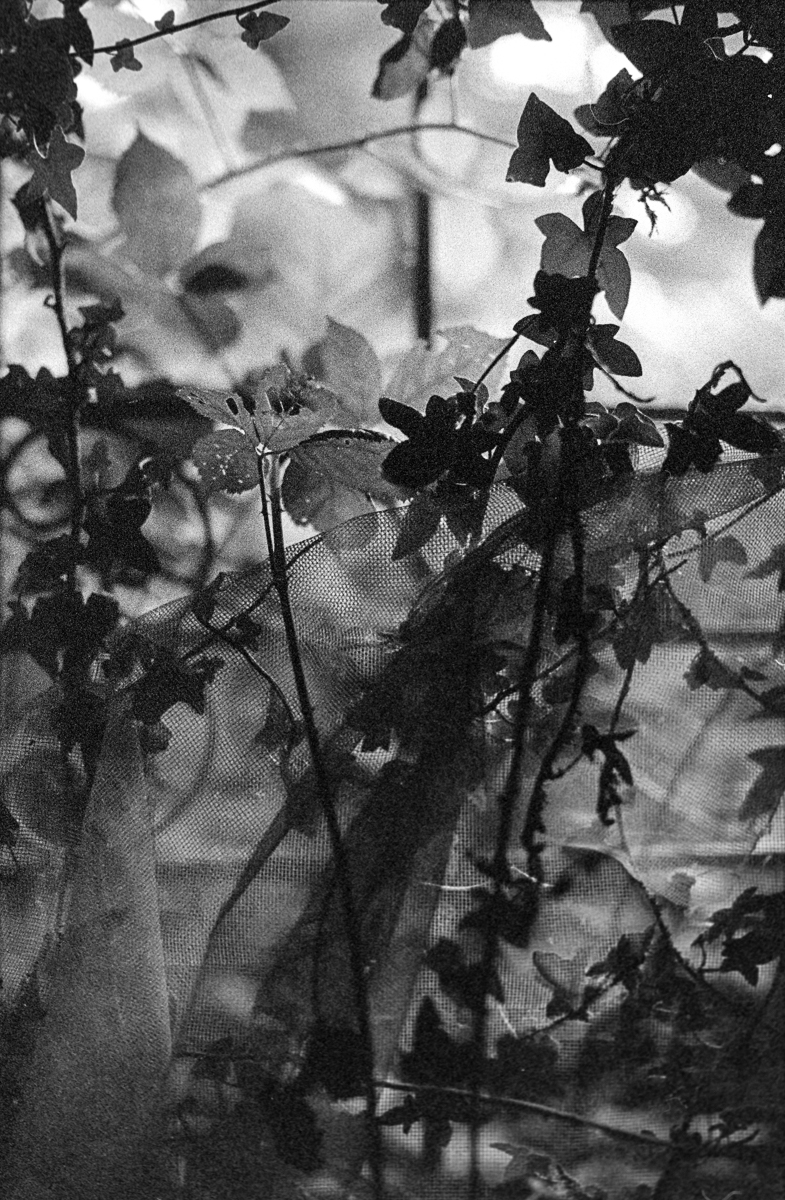
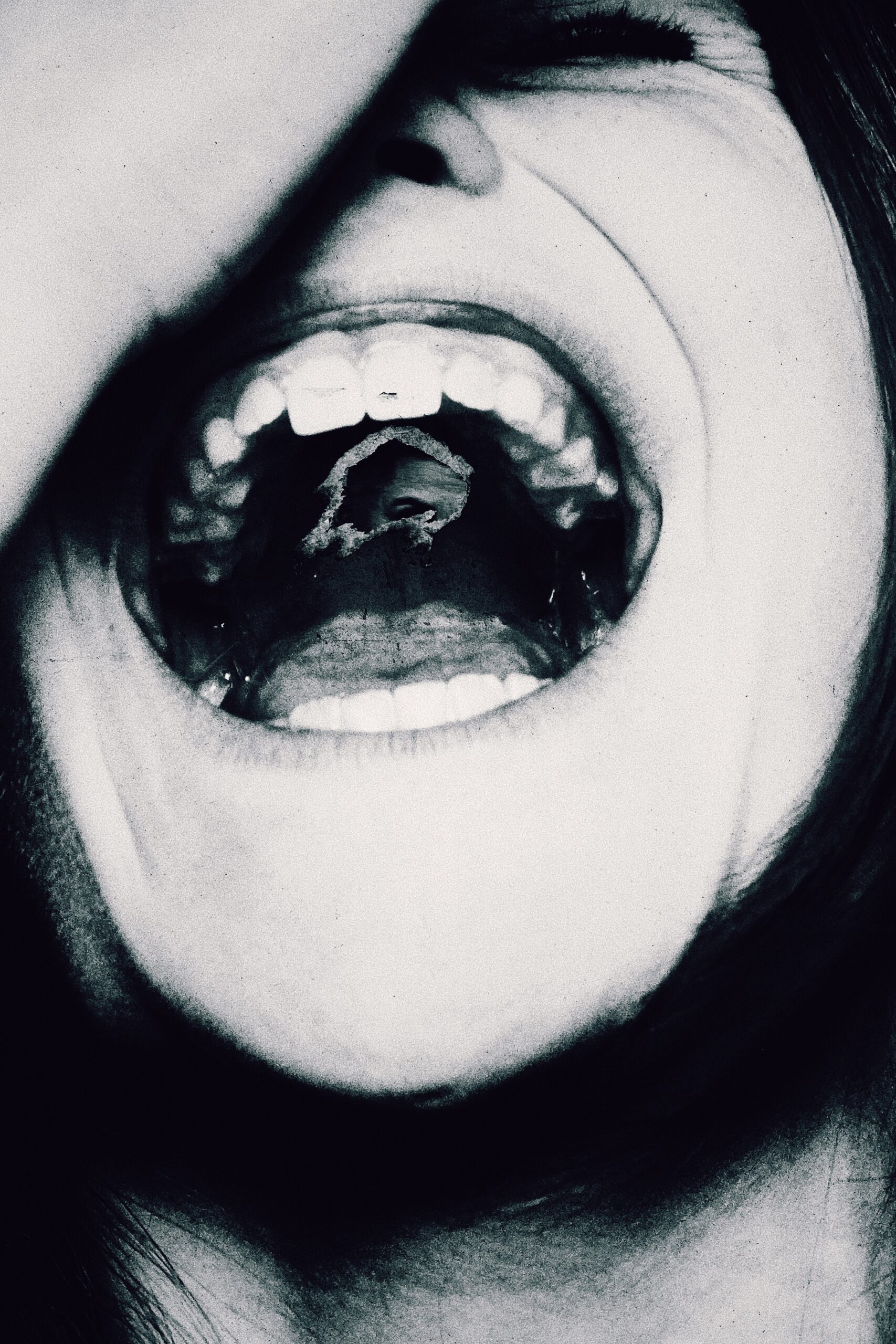
INNER LANDSCAPE: Camera is always pointed at a subject, always. Occasionally one of camera’s photographs points away from the subject, toward the mind, or the heart, or the imagination. Confronted by a question, suddenly faced with only part of a circle sketched, I must do something. Reject? Too easy. Answer the question from my own resources, where else? Close the circle from the features of my inner landscape. I relate, take part, participate when I close the circle of joy. Image and I are united, joyous.

— Minor White
j j j

Die Mehrheit hat immer nur Unglück gebracht

Nicht weil sie die Mehrheit ist, ist sie zeitgemäß, dachte ich, wie geglaubt wird und aus diesem Glauben gehandelt wird, sehr oft zum Nachteil ihrer Zeit, auch eine oder die Minderheit kann zeitgemäß sein und sehr oft viel zeitgemäßer als die Mehrheit und ist es fast immer, auch ein Einzelner kann zeitgemäßer als die Mehrheit sein und im Grunde ist er sehr oft der Zeitgemäßeste. Die Mehrheit hat immer nur Unglück gebracht, dachte ich, auch heute verdanken wir unser Unglück, wenn es ein solches ist, der Mehrheit. Die Minderheit oder auch nur der Einzelne werden ja gerade deshalb von der Mehrheit erdrückt, weil sie viel zeitgemäßer handeln als die Mehrheit. Die zeitgemäßen Gedanken sind immer unzeitgemäß, dachte ich.

— Thomas Bernhard, Auslöschung

j j j

In this Colony

Amsterdam, August 2021


Colony

A cry for help, a hint of anaesthesia
The sound from broken homes
We used to always meet here
As he lays asleep, she takes him in her arms
Some things i have to do, but i don’t mean you harm
A worried parent’s glance, a kiss, a last goodbye
Hands him the bag she packed, the tears she tries to hide
A cruel wind that blows down to our lunacy
And leaves him standing cold here in this colony
I can’t see why all these confrontations
I can’t see why all these dislocations
No family life, this makes me feel uneasy
Stood alone here in this colony
In this colony, in this colony, in this colony, in this colony
Dear god in his wisdom took you by the hand
God in his wisdom made you understand
God in his wisdom took you by the hand
God in his wisdom made you understand
God in his wisdom took you by the hand
God in his wisdom made you understand
God in his wisdom took you by the hand
God in his wisdom made you understand
In this colony, in this colony, in this colony, in this colony
– Ian Curtis/Joy Division
j j j

Signs Signifying Nothing

In this world, there are only things—saleable objects—and signs—the abstract instruments of sale and purchase, the different forms of money and credit.

— Alain Badiou, From False Globalisation to the One Communist World

j j j

What happens when nothing happens?

When I find myself in an unfamiliar place, I’m overcome with the urge to exhaust it, to cover as much ground as I can and reach to some kind of arbitrary, invented limit of photographs I could make there. Like the cartographers of Borges’ story constructing a map of the Empire to match the size of the Empire itself, I aspire to a completeness that borders on the absurd. *In the name of completenes*, Georges Perec writes, *we would like to believe that a unique order exists that would enable us to accede to knowledge all in one go*. One rainy October weekend in Paris, Perec himself sat in a cafè at the Place Saint-Sulpice detailing every occurence that passed through his field of vision, forming an account of *what happens when nothing happens other than the weather, people, cars and clouds*. Despite his efforts to chart all the minutiae that typically go unnoticed or unremarked upon – the ‘infra-ordinary’, as he termed it – he demonstrated that even the whole of our individual observations amounts to very little, barely a drop in Heraclitus’s ever-flowing rover. In Italo Calvino’s Story “The Adventure of a Photographer”, the protagonist remarks that *photography has a meaning only if it exhausts all possible images*. This view only encourages my feeling that it’s necessary to apprehend the entirety of a place. But, then again, by what means could this even be realized? And how might I contend with the idea that photography is otherwise devoid of meaning?

— Alan Huck, I walk towards the Sun, which is always going down.

j j j

Being of A Paper Cup

“[…] Humans are not totally in charge of assigning significance and value to events that can be statistically measured. The worry is not wether the world will end, as in the old model of the dis-astron, but wether the end of the world is already happening, or wether it might already have taken place. A deep shuddering of temporality occurs. Furthermore, hyperobjects  seem to continue what Siegmund Freud considered the great humiliation of the human following Copernicus and Darwin, Jacques Derrida rightly adds Freud to the list of humiliators – after all, he displaces the human from the very center of psychic activity. But we might also add Marx, who displaces human social life with economic organization. And we could add Heidegger and Derrida himself who in related but subtly different ways  displace the human from the center of meaning-making. We might further expand the list by bringing in Nietzsche and his lineage, which now runs through Deleuze and Guattari  to Brassier: “Who gave us the sponge to wipe away the entire horizon?” (Nietzsche) And in a different vein, we might add that OOO radically displaces the human by insisting that my being is not everything it’s cracked up to be – or rather that the being of a paper cup is as profound as mine.

 — Timothy Morton, Hyperobjects, p.16

j j j