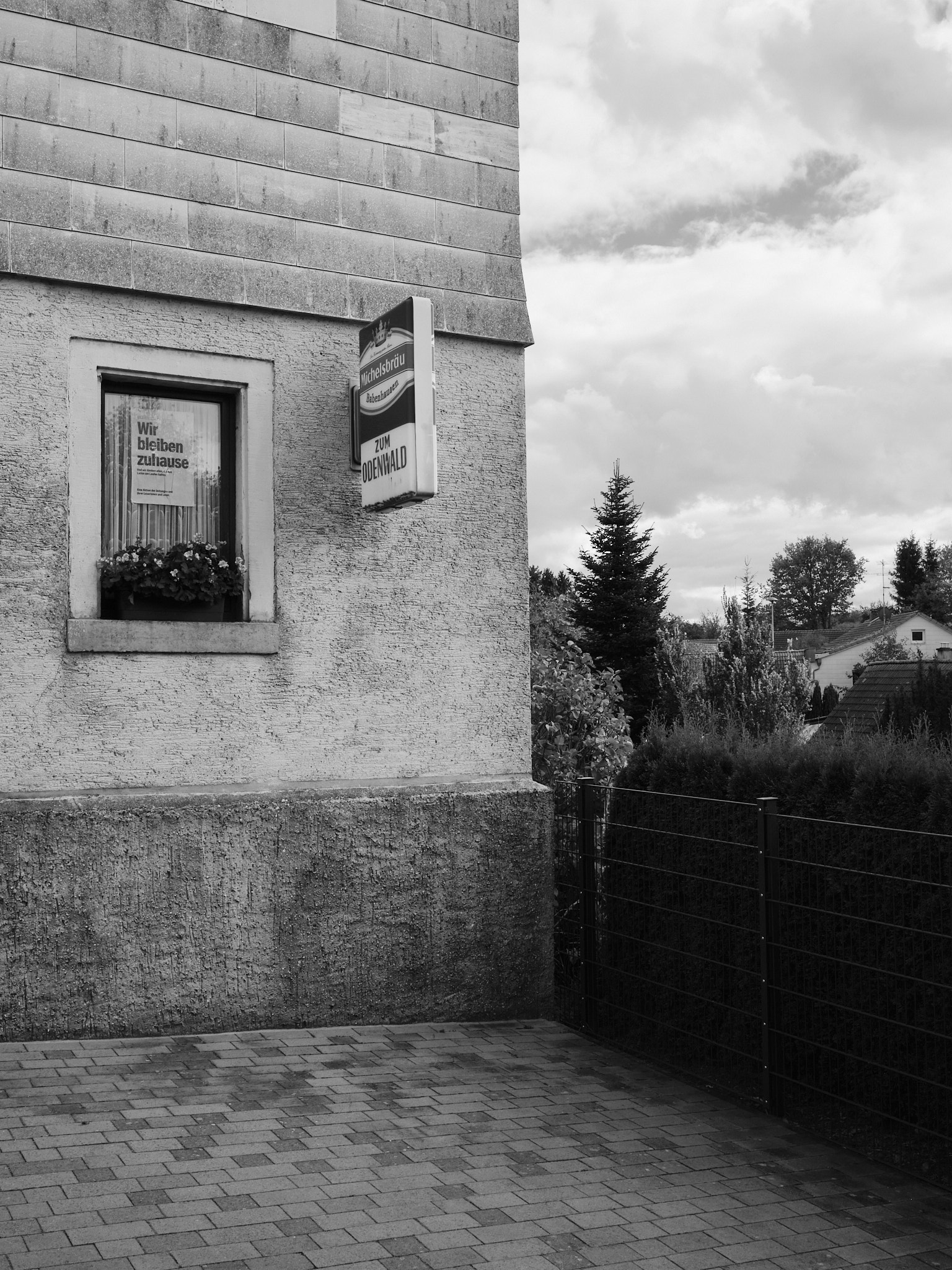
Wir bleiben zuhause
j j j
“Where the real world changes into simple images, the simple images become real beings and effective motivations of hypnotic behavior.”
― Guy Debord, The Society of the Spectacle
images as debris
this is how we see the world: you don’t know where a picture begins and where a picture ends.
“I wanted to pull out everything that was nameable in my work and have people look at fragments of both paint and images coming together—filtering together—and then falling apart.”
–sarah sze
What we are looking for: Pictures that are things by themselves, not pictures showing something else.
Archaïscher Torso Apollos
Wir kannten nicht sein unerhörtes Haupt,
darin die Augenäpfel reiften. Aber
sein Torso glüht noch wie ein Kandelaber,
in dem sein Schauen, nur zurückgeschraubt,sich hält und glänzt. Sonst könnte nicht der Bug
der Brust dich blenden, und im leisen Drehen
der Lenden könnte nicht ein Lächeln gehen
zu jener Mitte, die die Zeugung trug.Sonst stünde dieser Stein entstellt und kurz
unter der Schultern durchsichtigem Sturz
und flimmerte nicht so wie Raubtierfelle;und bräche nicht aus allen seinen Rändern
aus wie ein Stern: denn da ist keine Stelle,
die dich nicht sieht. Du mußt dein Leben ändern.
— Rainer Maria Rilke
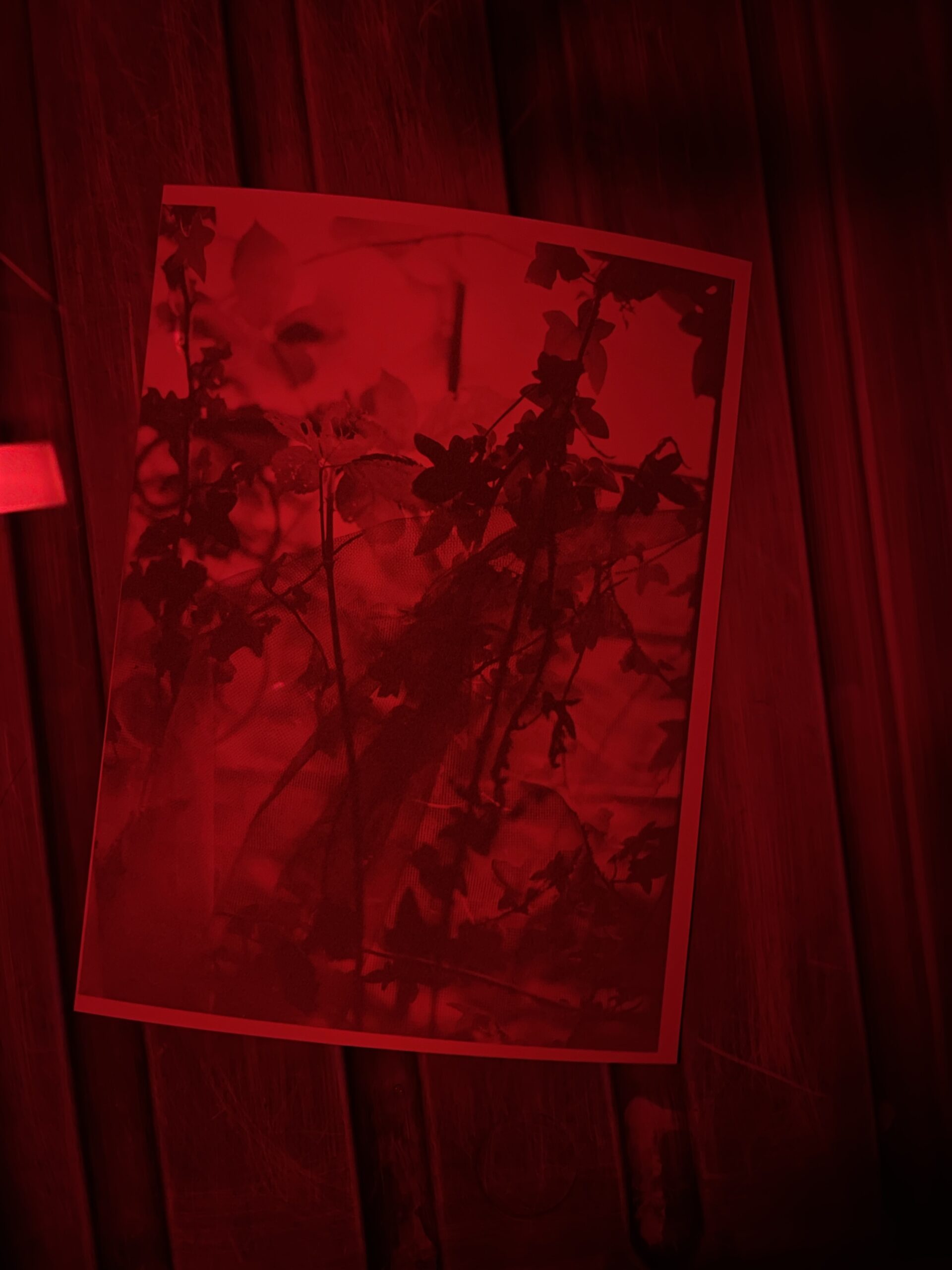
What is the visual fabric of memory? Its dominant feature is a a lack of precision. It consists mainly of holes with a pull that wants them to be leaving holes to be filled in: What is not a hole is just something that points to something we cannot see: An ongoing fight against the indexicality of the image. It does not show something, it only reminds me of something the picture does not show.
In this it turns into a constant slipping: We remember, we forgot, we stumble, we catch ourselves and this catching-ourselves becomes the actual stumble…
It is that time itself has been traumatized so that we come to comprehend history not as a random sequence of events but as a series of traumatic clusters.
— Mark Fisher, The Weird and the Eerie
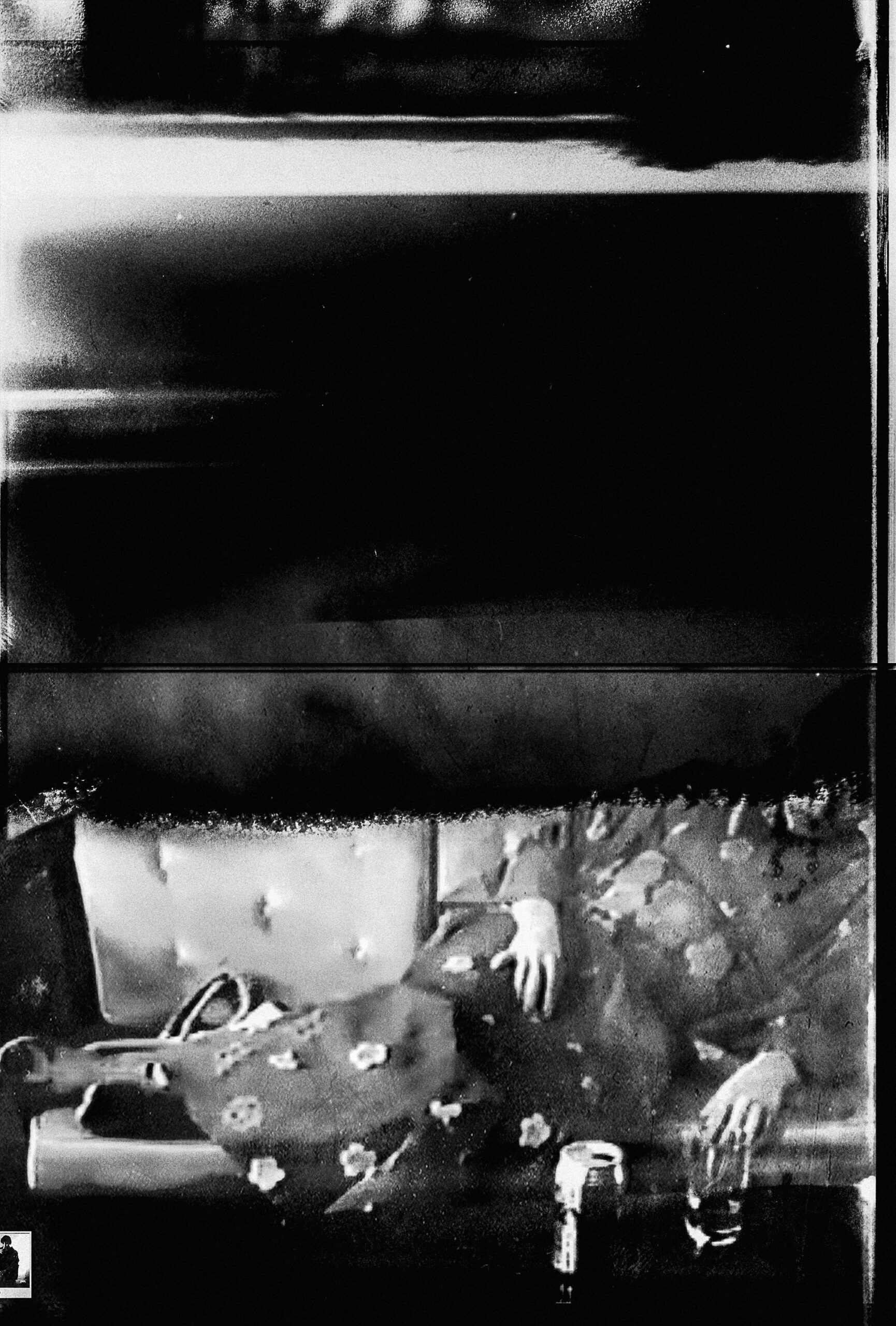
Found Footage
About taking selfies on a beach in South Korea
The gigantic floral dress that looks like an armory stiff hanging around her lanky frame
Drinks were brought and had to be photographed
The weather was not good the sun made only a cursory appearance
Kids were arranged to be photographed in front of the cafe, the sea in the back
It made a lot of sense as the light was coming from there
My jealousy: the world is so beautiful that you want to copy it. All of it.
The photo crisis of 22 that followed on the heels of the photo crisis of 21… when this machinery had suddenly stopped, and I found absolutely no reason to take a photo
A sunset: 78%, a landscape: 76%, a little girl playing with a cat: 56%, a woman breast-feeding: 54%, a folk dance: 46%, a weaver at work: 39%, a famous monument: 27%, a first communion: 26%, a snake: 20%, a rope 16%, a metal frame: 15%, cabbages: 12%, a butcher’s stall: 9%… a car accident: 1%
— Pierre Bourdieu, “The Social Definition Of Photography” in: Photography, A Middle Brow Art
The first generation that experienced the world through a screen before experiencing it without a simulacra
This tiny mirror in my hand.
[Modern art has to do with …] taking things apart and exposing. And traditional art , the art of the past, is a hidden art. And it could be that, temperamentally, the source of my difficulty here, if it is a difficulty, is a constant pulling, veering, between exposing and hiding.
— Philip Guston
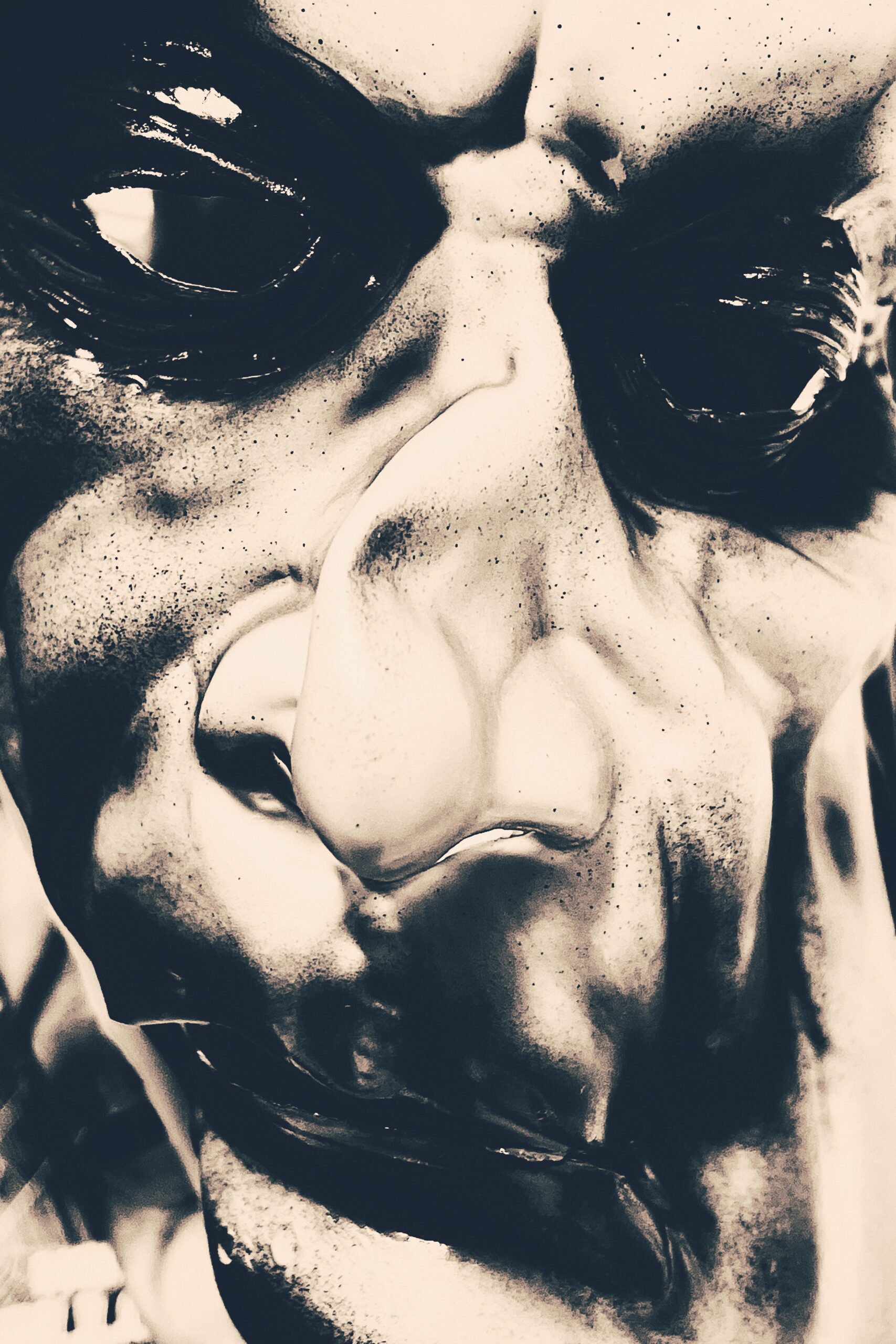
Being yourself means branding your identity clearly so that algorithms can advertise to you.
–Jenny Odelll
Unser größtes Unglück: Dass wir die Tiefe des Unglücks im Herzen unseres Nächsten nicht ermessen können. Unser größtes Glück: Dass wir die Tiefe des Unglücks in unserem eigenen Herzen nicht ermessen können.