For us, art is very straightforward and narrowly-defined. If you make art based on politics, then for us it’s not art. If you make art based on environmental protection, then for us it’s not fucking art.
— Birdhead
For us, art is very straightforward and narrowly-defined. If you make art based on politics, then for us it’s not art. If you make art based on environmental protection, then for us it’s not fucking art.
— Birdhead
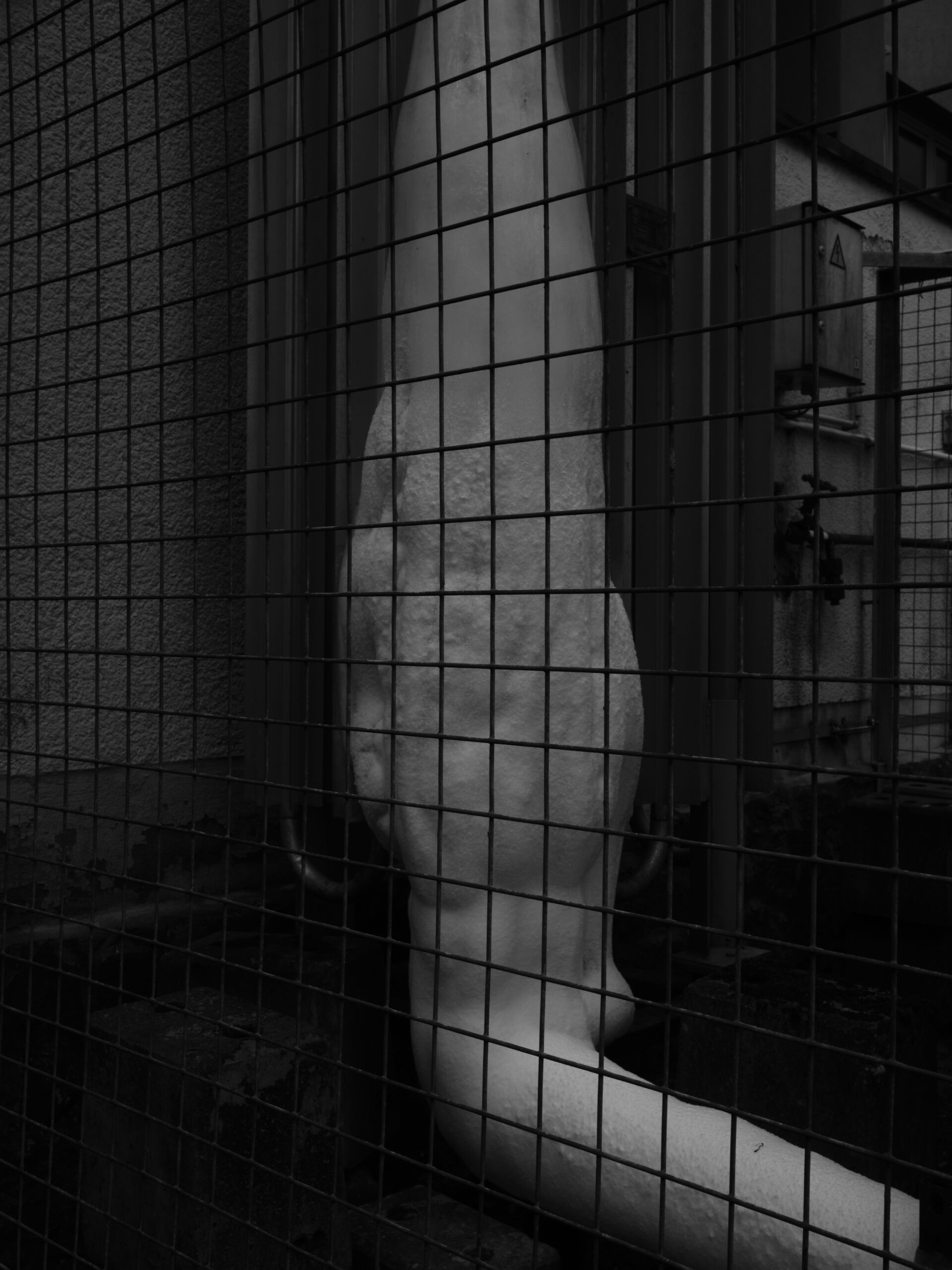
Frozen, Hanau March 2021
Engelmann[Paul Engelmann, Wittgenstein’s close friend and faithful correspondent] told me that when he rummages round at home in a drawer full of his own manuscripts, they strike him as so glorious that he thinks they would be worth presentingto other people. (He said, it’s the same when he is reading through letters from his dead relations) But when he imagines a selection of them published he said, the whole business loses its charm & value & becomes impossible. I said this case was like the following one: Nothing could be more remarkable than seeing someone who thinks himself unobserved engaged in some quite simple everyday activity. Let’s imagine a theatre, the curtain goes up & we see someone alone in his room walking up and down, lighting a cigarette, seating himself etc. so that suddenly we are observing a human being from outside in a way that ordinarily we can never observe ourselves; as if we were watching a chapter from a biography with our own eyes, – surely, this would be at once uncanny and wonderful. More wonderful than anything that a playwright could cause to be acted or spoken on the stage. We should be seing life itself. – But then we do see this every day & it makes not the slightest impression on us!
True enough, but we don’t see it from that point of view. – Similarly, when E. looks at his writings and finds them splendid(even though he would not care to publish any of the pieces individually), he is seeing his life as God’s work of art, & as such it is certainly worth contemplating, as is every life & everything whatever. But only the artist can represent the individual thing[das Einzelne] so that it appears to us as a work of art; those manuscripts rightly lose their value if we contemplate them singly & in any case without prejudice, i.e. without being enthusiastic about them in the advcance. The work of art compels us – as one might say – to see it in the right perspective, but without art the object [der Gegenstand] is a piece of nature like any other & the fact that we may exalt through our enthusiasm does not give anyone the right to display it to us. (I am always reminded of one of those insipid photographs of a piece of scenery which is interesting to the person who took it because he was there himself, experienced something, but which a third party looks at with justifiable coldness; insofar as it is ever justifiable to look at something with coldness.)
But now it seems to me too that besides the work of the artist there is another through which the world may be captured sub specie aeterni. It is – as I believe – the way of thought which as it were flies above the world and leaves it the way it is, contemplating it from above in its flight.
— L. Wittgenstein, in: Culture an Value, cited from Michael Fried, Why Photography Matters As Art As Never Before
Besinnung ist der Mut, die Wahrheit der eigenen Voraussetzungen und den Raum der eigenen Ziele zum Fragwürdigsten zu machen.
— M. Heidegger, Zeit des Weltbildes
• Wissenschaft
• Maschinentechnik
• Das Kunstwerk wird zum Gegenstand des Erlebens
• das menschliche Tun als Kultur
• Entgötterung
Die Entgötterung ist der Zustand der Entscheidungslosigkeit über den Gott und die Götter.
— M. Heidegger, Zeit des Weltbildes
Yesterday, after the light was gone; and where is all this leading? And, he is asking, if art, then what for? Or he is not even questioning that, as also the point of questioning it is vanishing fast. “We’re not getting any younger, you know? And not getting anywhere, or at least, so it seems.” He said, leaning on the bar, almost loosing his balance. “We once had dreams. But that is actually not true: We only now wished we had dreams we did not achieve, that would make it simpler to explain why we are disappointed. Now it almost looks we’re disappointed for no apparent reason. We despise others who have reached what we never actually wanted. Yet, the envy. The pity for ourselves. The feeling of having lost something without exactly knowing what. It’s not like I had great aspirations as a director. Oh, yes, once I had those. But putting in the work? I was not willing to do that. I never really learned how to actually do the work. It is my laziness.”
I would be ridiculous saying, ‘I love the people,’ since I am the same as they are. Lacerated, but absent. My laceration is more confusing, my absence certainly.
—Georges Bataille, Guilty